Public Endpoint Management: Reducing Unnecessary Internet Exposure
Introduction
Modern businesses depend heavily on cloud applications, web platforms, APIs, remote-access services, and other internet-facing systems. While these services make digital operations more accessible and flexible, every publicly accessible endpoint can also create a potential entry point for cyber threats.
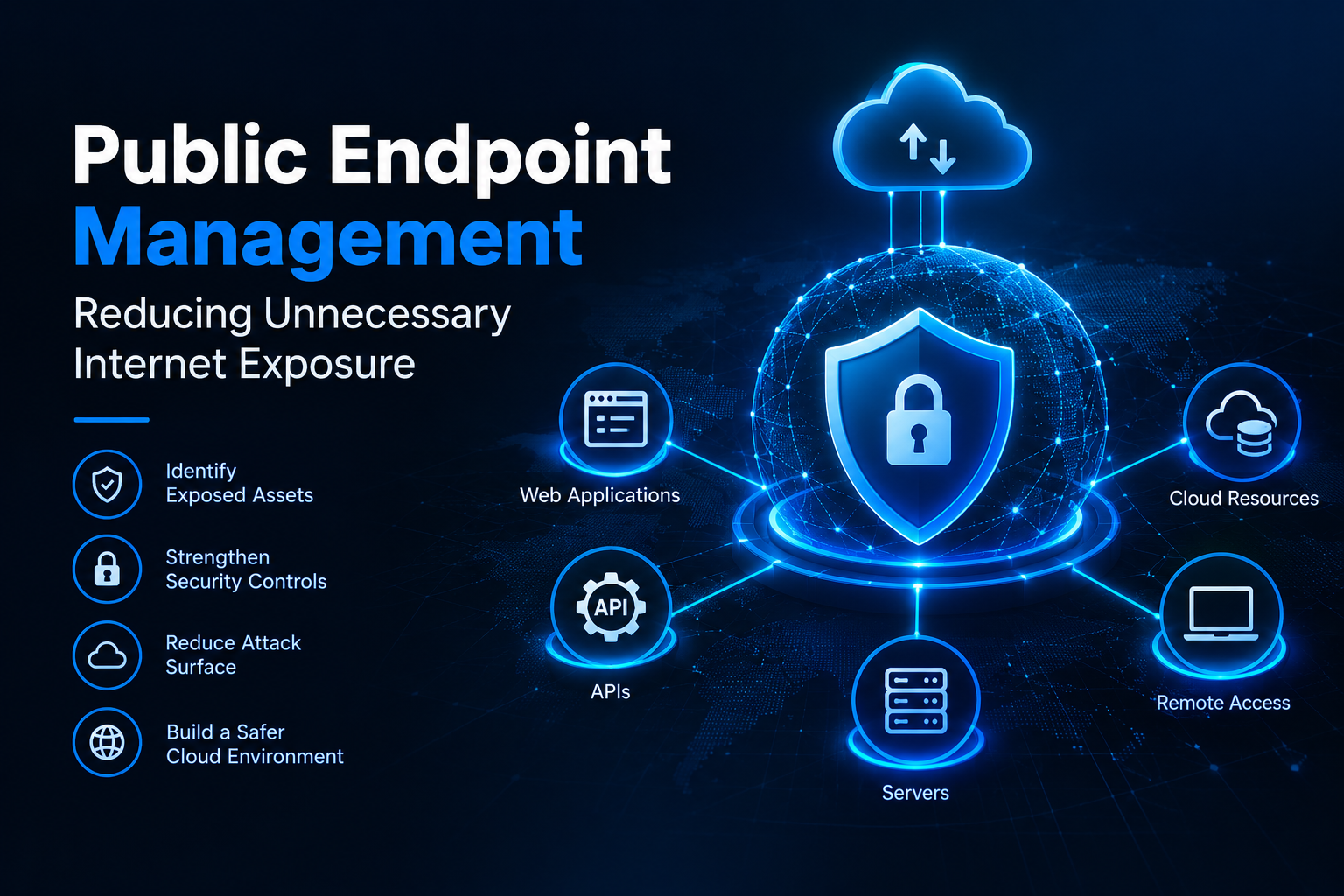
Public endpoint management focuses on identifying which systems genuinely need to be accessible from the internet and restricting access to everything else. This includes websites, APIs, cloud resources, remote management interfaces, public IP addresses, and other internet-facing services.
A strong approach to Cloud Security can help organisations maintain visibility over these assets and reduce unnecessary exposure. Businesses looking to strengthen their cloud environment can explore https://www.rashicore.com/cloud-security.php for dedicated cloud security solutions.
What Is Public Endpoint Management?
Public endpoint management is the process of discovering, assessing, securing, monitoring, and controlling systems that can be accessed from outside an organisation's private network.
Common public endpoints include:
- Public-facing websites
- Web applications
- APIs and API gateways
- Cloud storage services
- Remote-access portals
- VPN services
- Public IP addresses
- Internet-facing servers
- Cloud management interfaces
- Development and testing environments
- Third-party services
The objective is not to eliminate every public endpoint. Many businesses need public-facing services to operate. Instead, the goal is to ensure that only necessary systems are publicly accessible and that each exposed endpoint has appropriate security controls.
Why Unnecessary Internet Exposure Is a Security Risk
An internet-facing service can potentially be discovered, scanned, and targeted by attackers. When unnecessary services are exposed, organisations increase the number of assets that need to be secured and monitored.
1. Increased Attack Surface
Every publicly accessible service adds another potential target. Unused applications, outdated systems, and unnecessary management interfaces can increase an organisation's external attack surface.
Reducing unnecessary exposure allows security teams to focus on the systems that genuinely need internet connectivity.
2. Cloud Misconfiguration
Cloud environments can change quickly. A storage resource, database, virtual machine, or application may accidentally become publicly accessible because of an incorrect security group, firewall rule, or access policy.
Regular exposure reviews can help identify and correct these configurations before they create significant security risks.
3. Vulnerability Exploitation
Internet-facing applications are exposed to external scanning and attack attempts. If an exposed system contains an unpatched vulnerability, attackers may attempt to exploit it.
This makes vulnerability management particularly important for public endpoints.
4. Unauthorised Access
Publicly accessible administrative interfaces can attract password attacks, credential stuffing, and other unauthorised access attempts.
Sensitive management services should therefore be protected with strong authentication, access restrictions, and additional security controls.
5. Increased Monitoring Requirements
The more systems an organisation exposes to the internet, the more assets security teams need to monitor.
Reducing unnecessary endpoints can simplify security operations and make it easier to identify suspicious activity.
Identifying Unnecessary Public Endpoints
The first step towards reducing internet exposure is understanding what is currently accessible.
Organisations should maintain an accurate inventory of:
- Public IP addresses
- Open ports
- Internet-facing applications
- APIs
- Cloud resources
- Remote-access services
- Administrative interfaces
- Public storage
- Databases
- Development environments
- Third-party services
External Attack Surface Management can help organisations discover internet-facing assets that may not be recorded in their internal inventories.
Businesses should also review their public endpoints regularly because cloud environments are constantly changing. New applications, temporary resources, testing environments, and configuration changes can unintentionally create new exposure.
Practical Ways to Reduce Internet Exposure
Remove Unnecessary Public Access
If a system does not require internet access, it should not remain publicly accessible.
Internal databases, development systems, administrative tools, and private applications can often be moved behind private networks or restricted access controls.
Restrict Network Access
Firewalls, security groups, network access control lists, and other network security mechanisms can limit who can connect to an endpoint.
Instead of allowing unrestricted inbound access, organisations should define specific:
- IP addresses
- Ports
- Protocols
- Applications
- User groups
- Network sources
This approach reduces the number of systems that are unnecessarily reachable.
Use Private Endpoints
Where supported, private endpoints can allow cloud services to communicate through private network connections rather than requiring direct public internet access.
This can help organisations reduce exposure while maintaining access between applications and cloud services.
A comprehensive Cloud Security strategy should consider private connectivity, network segmentation, access control, and continuous monitoring together. More information about cloud security solutions is available at https://www.rashicore.com/cloud-security.php.
Secure Administrative Interfaces
Administrative interfaces require additional protection because they can provide privileged access to important systems.
Organisations should:
- Avoid exposing management ports unnecessarily.
- Use secure remote-access solutions.
- Enable multi-factor authentication.
- Restrict administrator access.
- Use privileged access controls.
- Monitor administrative activity.
- Review access permissions regularly.
Where possible, administrative services should only be accessible from trusted networks or authorised users.
Apply Strong Authentication
Public-facing services should use appropriate authentication and authorisation mechanisms.
Multi-factor authentication is especially important for administrative accounts and services that provide access to sensitive business information.
Strong passwords, role-based access control, account monitoring, and session management should also form part of the security strategy.
Keep Internet-Facing Systems Updated
Public-facing applications should be regularly patched and maintained.
Security teams should track:
- Operating system versions
- Application versions
- Frameworks
- Libraries
- Security patches
- Unsupported software
- Known vulnerabilities
An outdated application that is directly accessible from the internet can create unnecessary security risks.
The Role of Cloud Security in Exposure Reduction
Public endpoint management should be treated as an important part of an organisation's overall cloud security strategy.
Cloud environments include applications, workloads, identities, APIs, databases, storage resources, networks, and third-party integrations. Protecting these components requires multiple layers of security.
A strong Cloud Security strategy can include:
- Identity and access management
- Network segmentation
- Endpoint protection
- Vulnerability management
- Encryption
- Security monitoring
- Logging and alerting
- Configuration management
- Attack surface management
- Incident response
- Data protection
For businesses that want to improve visibility and protection across their cloud infrastructure, https://www.rashicore.com/cloud-security.php provides more information about cloud security solutions.
Benefits of Reducing Unnecessary Internet Exposure
Reduced Attack Surface
Removing unnecessary public endpoints reduces the number of systems that attackers can discover and target.
Better Security Visibility
An accurate inventory gives security teams a clearer understanding of what is exposed to the internet.
Improved Access Control
Restricting public access ensures that sensitive systems are available only to authorised users and networks.
Lower Configuration Risk
Regular reviews can identify overly permissive firewall rules, public storage, exposed databases, and other configuration issues.
Stronger Cloud Security Posture
Reducing unnecessary exposure helps businesses create a more controlled and resilient cloud environment.
Easier Security Management
Fewer exposed systems mean security teams have fewer external assets to monitor, patch, and protect.
Conclusion
Public endpoint management plays an important role in reducing unnecessary internet exposure and strengthening an organisation's overall security posture. As businesses increasingly rely on cloud platforms and internet-facing applications, maintaining visibility over exposed assets has become essential.
Organisations should identify every public endpoint, confirm its business purpose, remove unnecessary access, restrict sensitive systems, secure administrative interfaces, apply strong authentication, and continuously monitor changes.
Visit Website
For professional cloud security solutions, infrastructure protection, and exposure reduction, visit:
 UK
 USA
 UAE
 Canada
 Australia
 Germany
 Singapore
 Netherlands