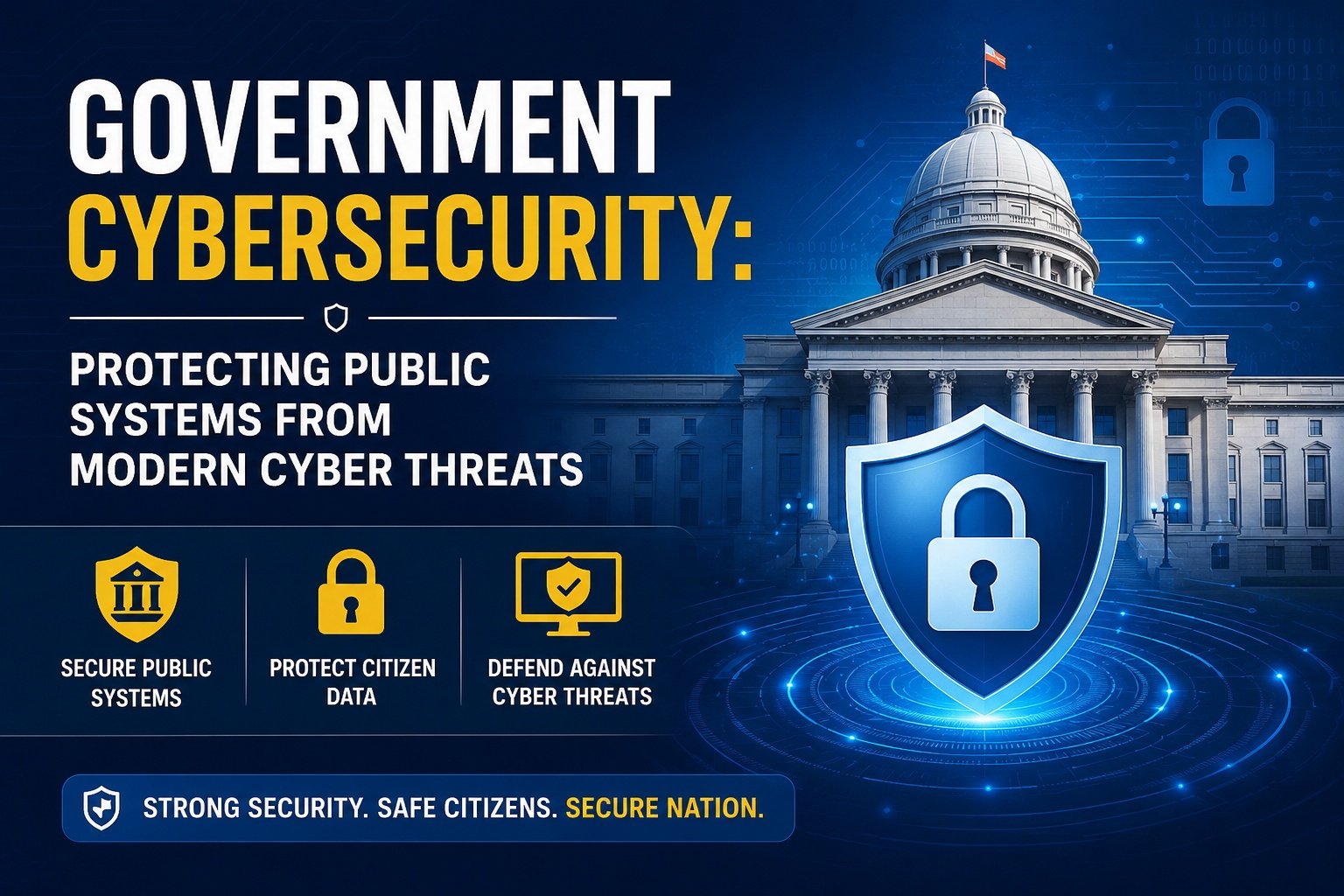
Government Cybersecurity: Protecting Public Systems from Modern Cyber Threats
Government organizations manage critical infrastructure, public services, national information, and sensitive citizen data. This makes government systems an attractive target for cybercriminals, ransomware groups, and other sophisticated threats. Strong government cybersecurity is therefore essential for protecting public services and maintaining trust.
Why Government Cybersecurity Matters
A cyberattack against a government organization can affect more than internal systems. It can disrupt essential services, expose sensitive citizen information, and impact critical infrastructure.
Effective cybersecurity helps government organizations:
- Protect sensitive citizen and government data
- Secure public-facing digital services
- Prevent unauthorized system access
- Detect and respond to cyber threats
- Maintain continuity of essential services
- Meet security and compliance requirements
Organizations can strengthen their protection with Rashicore Government Security Solutions: https://www.rashicore.com/government.php
Key Areas of Government Cybersecurity
1. Critical Infrastructure Protection
Power, transportation, utilities, communication networks, and other essential services require strong security controls. Protecting these systems helps reduce the impact of attacks that could disrupt public operations.
2. Secure Government Networks
Government networks connect departments, employees, applications, and critical systems. Network security measures such as access controls, monitoring, segmentation, and threat detection can help prevent unauthorized activity.
3. Citizen Data Protection
Government organizations handle large amounts of sensitive citizen information. Encryption, secure access controls, data monitoring, and proper security policies can help protect this information from unauthorized access.
4. Threat Detection and Response
Continuous monitoring allows security teams to identify suspicious activity and respond to potential incidents quickly. A dedicated 24/7 SOC monitoring approach can provide continuous surveillance and incident response for critical environments.
5. Cloud Security
As government services increasingly use cloud infrastructure, cloud security becomes an important part of overall cyber defense. Secure configurations, identity management, monitoring, and data protection help reduce cloud-related risks.
Building a Strong Government Cyber Defense Strategy
A successful government cybersecurity strategy should combine technology, people, policies, and continuous monitoring. Regular risk assessments, vulnerability testing, employee security awareness, incident response planning, and security monitoring can help organizations remain prepared for evolving threats.
Rashicore's government security solutions cover areas including critical infrastructure security, cyber defense systems, network security, cloud security, compliance and governance, and 24/7 SOC monitoring. https://www.rashicore.com/government.php
Conclusion
Government cybersecurity is essential for protecting public systems, critical infrastructure, and sensitive citizen data. As cyber threats continue to evolve, government organizations need proactive security strategies that identify risks early and strengthen their defenses.
By combining secure networks, access controls, data protection, threat detection, cloud security, compliance, and continuous monitoring, governments can build more resilient digital environments.
For more information, explore Government & Public Sector Cybersecurity: https://www.rashicore.com/government.php
 UK
UK
 USA
USA
 UAE
UAE
 Canada
 Australia
 Germany
 Singapore
 Netherlands