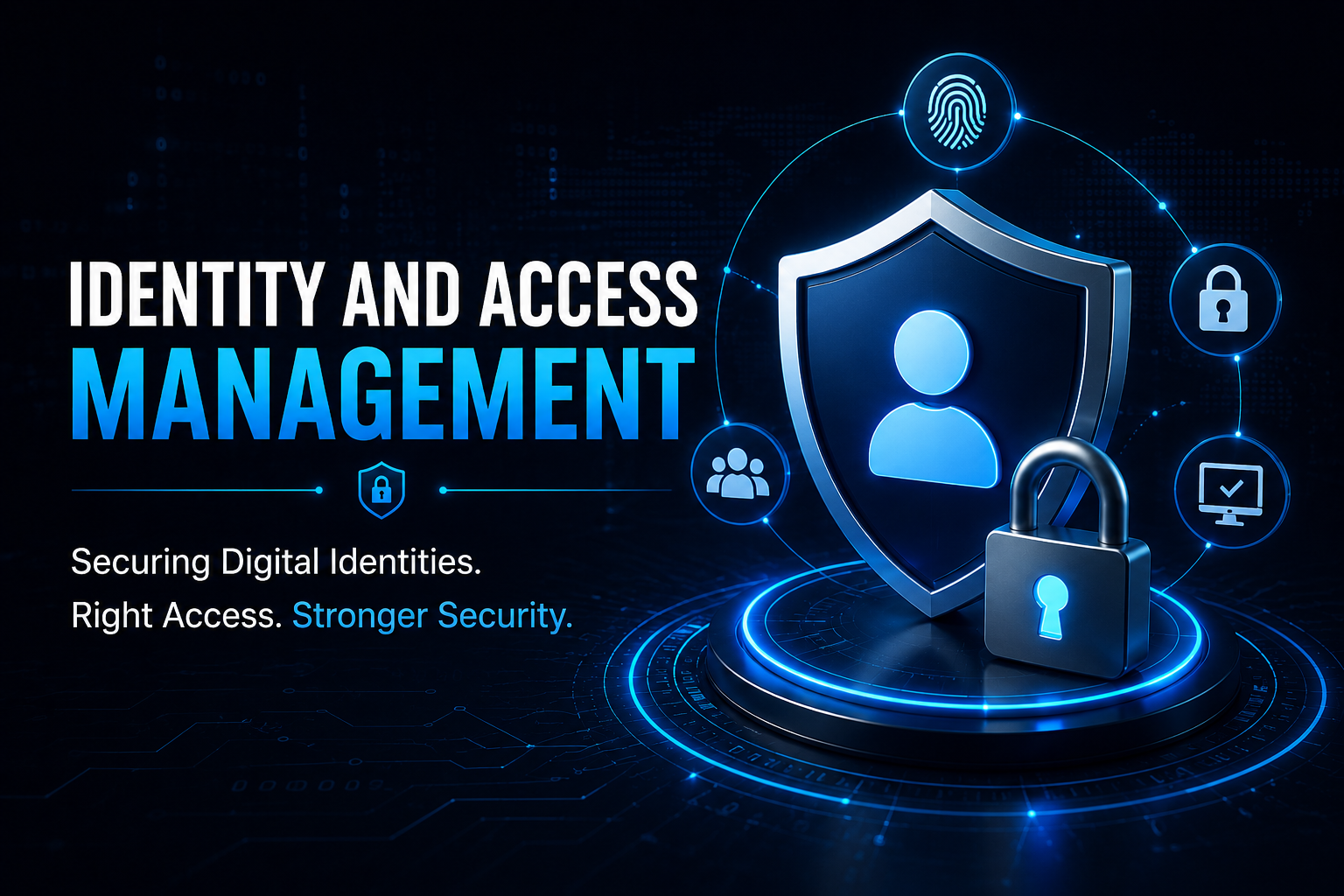
Identity and Access Management: Securing Digital Identities
Introduction
In today’s digital environment, organizations rely on applications, cloud platforms, databases, and connected systems to operate efficiently. As the number of digital users and resources increases, controlling who can access what has become a critical cybersecurity priority.
Identity and Access Management (IAM) provides a structured approach to managing digital identities and controlling access to organizational resources. It helps businesses ensure that the right users have the right level of access at the right time while reducing the risk of unauthorized access.
What Is Identity and Access Management?
Identity and Access Management is a cybersecurity framework used to create, manage, authenticate, and control digital identities. IAM allows organizations to verify user identities and determine which systems, applications, or data they are authorized to access.
IAM typically covers employees, administrators, contractors, partners, customers, applications, and other digital identities.
The primary goal is simple: allow legitimate users to access the resources they need while preventing unauthorized access.
Why Is IAM Important for Cybersecurity?
Weak identity controls can create significant security risks. Stolen credentials, excessive permissions, inactive accounts, and poor authentication practices can give attackers opportunities to enter corporate environments.
Effective IAM helps organizations:
- Prevent unauthorized access
- Reduce identity-related security risks
- Control user permissions
- Protect sensitive business data
- Improve visibility into user activity
- Support regulatory and compliance requirements
- Reduce the impact of compromised credentials
Key Components of IAM
1. Identity Management
Identity management involves creating and maintaining digital identities throughout their lifecycle. When an employee joins an organization, their identity and required permissions can be created. When they change roles or leave, their access can be updated or removed.
This helps prevent inactive or unnecessary accounts from remaining active.
2. Authentication
Authentication verifies that a user is who they claim to be. Traditional passwords alone may not provide sufficient protection against modern attacks.
Organizations can strengthen authentication through:
- Multi-Factor Authentication (MFA)
- Biometrics
- Security keys
- One-time passwords
- Passwordless authentication
3. Authorization
Authentication confirms identity, while authorization determines what that identity is allowed to access.
For example, an employee may have permission to access business applications but not sensitive financial databases. Proper authorization ensures that access is aligned with the user's responsibilities.
4. Role-Based Access Control
Role-Based Access Control (RBAC) assigns permissions according to job roles. Instead of managing permissions individually for every user, organizations can create roles such as administrator, manager, developer, or standard employee.
This simplifies access management and supports the principle of least privilege.
5. Single Sign-On
Single Sign-On (SSO) allows users to access multiple authorized applications using a single set of credentials.
SSO can improve user experience while reducing password-related risks when implemented with strong authentication and appropriate access controls.
6. Identity Lifecycle Management
Identity lifecycle management controls access from account creation through account modification and eventual deactivation.
Automated provisioning and deprovisioning can help ensure that users receive appropriate access when they join, change roles, or leave the organization.
Common IAM Security Challenges
Organizations may face several identity-related risks, including:
- Stolen usernames and passwords
- Phishing attacks
- Excessive user privileges
- Dormant accounts
- Poor access reviews
- Shared credentials
- Inconsistent authentication policies
- Third-party access risks
Without centralized identity controls, these challenges can become difficult to monitor and manage.
IAM Best Practices
Organizations can improve identity security by following several best practices:
Apply the Principle of Least Privilege
Users should receive only the permissions required to perform their responsibilities. Unnecessary administrative privileges should be avoided.
Enable Multi-Factor Authentication
MFA provides an additional layer of protection if usernames or passwords are compromised.
Conduct Regular Access Reviews
Access permissions should be reviewed periodically to identify excessive, outdated, or unnecessary privileges.
Automate User Provisioning and Deprovisioning
Automated workflows can reduce errors and ensure that access is granted or removed promptly.
Benefits of Strong Identity Security
A well-designed IAM strategy can provide:
- Stronger protection against unauthorized access
- Better control over user permissions
- Reduced credential-related risks
- Improved compliance and auditing
- Greater visibility into identity activity
- More efficient user management
- Improved security across cloud and on-premises environments
Conclusion
Digital identities are now a fundamental part of modern business operations, making identity security an essential component of cybersecurity. Identity and Access Management helps organizations control access, protect sensitive resources, and reduce risks associated with compromised or excessive privileges.
By implementing strong authentication, least-privilege access, role-based controls, regular access reviews, lifecycle management, and continuous monitoring, businesses can build a stronger identity security foundation and better protect their digital environments.
 UK
UK
 USA
USA
 UAE
UAE
 Canada
 Australia
 Germany
 Singapore
 Netherlands