
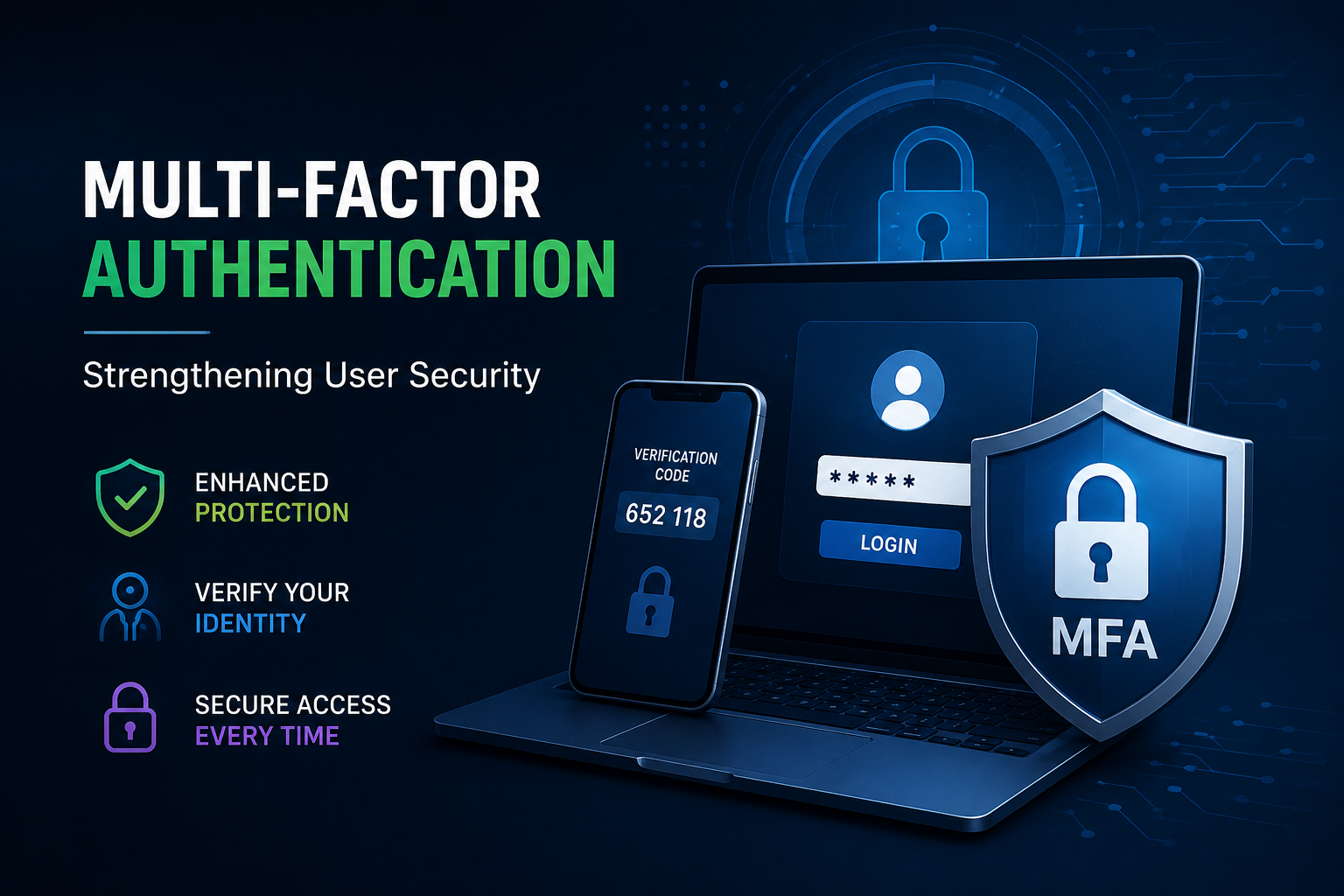
Multi-Factor Authentication (MFA): Strengthening User Security
In today’s digital world, protecting user accounts has become more important than ever. Passwords alone are no longer enough to prevent unauthorized access. Multi-Factor Authentication (MFA) adds an extra layer of security by requiring users to verify their identity through multiple authentication methods.
What Is Multi-Factor Authentication?
Multi-Factor Authentication is a security process that requires two or more verification factors before granting access to an account, application, or system. These factors usually include:
- Something you know: Password or PIN
- Something you have: Smartphone, security token, or authentication app
- Something you are: Fingerprint, facial recognition, or other biometric data
Even if an attacker obtains a user's password, MFA can prevent them from accessing the account without the additional verification factor.
Why Is MFA Important?
Cybercriminals frequently use phishing, password attacks, and stolen credentials to gain unauthorized access. MFA significantly reduces the risk associated with compromised passwords.
It helps organizations:
- Protect sensitive user and business data
- Reduce the risk of account takeover
- Strengthen access control
- Improve overall cybersecurity
- Meet security and compliance requirements
Common Types of MFA
1. Authentication Apps
Apps such as authenticator applications generate temporary verification codes that users enter during login.
2. SMS or Email Codes
A one-time code is sent to a registered phone number or email address. Although convenient, these methods are generally less secure than dedicated authentication apps or hardware security keys.
3. Biometric Authentication
Fingerprint scans, facial recognition, and other biometric methods provide a convenient way to verify a user's identity.
4. Security Keys
Physical security keys provide strong protection against phishing and unauthorized access by requiring a registered hardware device.
Benefits of MFA for Businesses
Implementing MFA can provide organizations with an additional security barrier against credential-based attacks. It is particularly valuable for protecting cloud applications, employee accounts, administrative systems, and remote access.
MFA can also support a Zero Trust security approach, where users and devices are continuously required to prove that they are authorized to access specific resources.
Best Practices for Implementing MFA
Organizations should choose authentication methods based on their security requirements and user needs. Some important practices include:
- Enable MFA for all critical accounts.
- Prioritize phishing-resistant authentication methods where possible.
- Protect administrator and privileged accounts with stronger authentication.
- Provide users with secure backup authentication options.
- Educate employees about phishing and MFA-related scams.
- Regularly review authentication policies and access permissions.
Conclusion
Multi-Factor Authentication is an essential part of modern cybersecurity. By requiring multiple forms of identity verification, MFA provides an additional layer of protection against stolen passwords and unauthorized access.
For organizations looking to strengthen their security strategy, implementing MFA across critical systems can be a practical and effective step toward protecting users, data, and digital assets.
 UK
UK
 USA
USA
 UAE
UAE
 Canada
 Australia
 Germany
 Singapore
 Netherlands